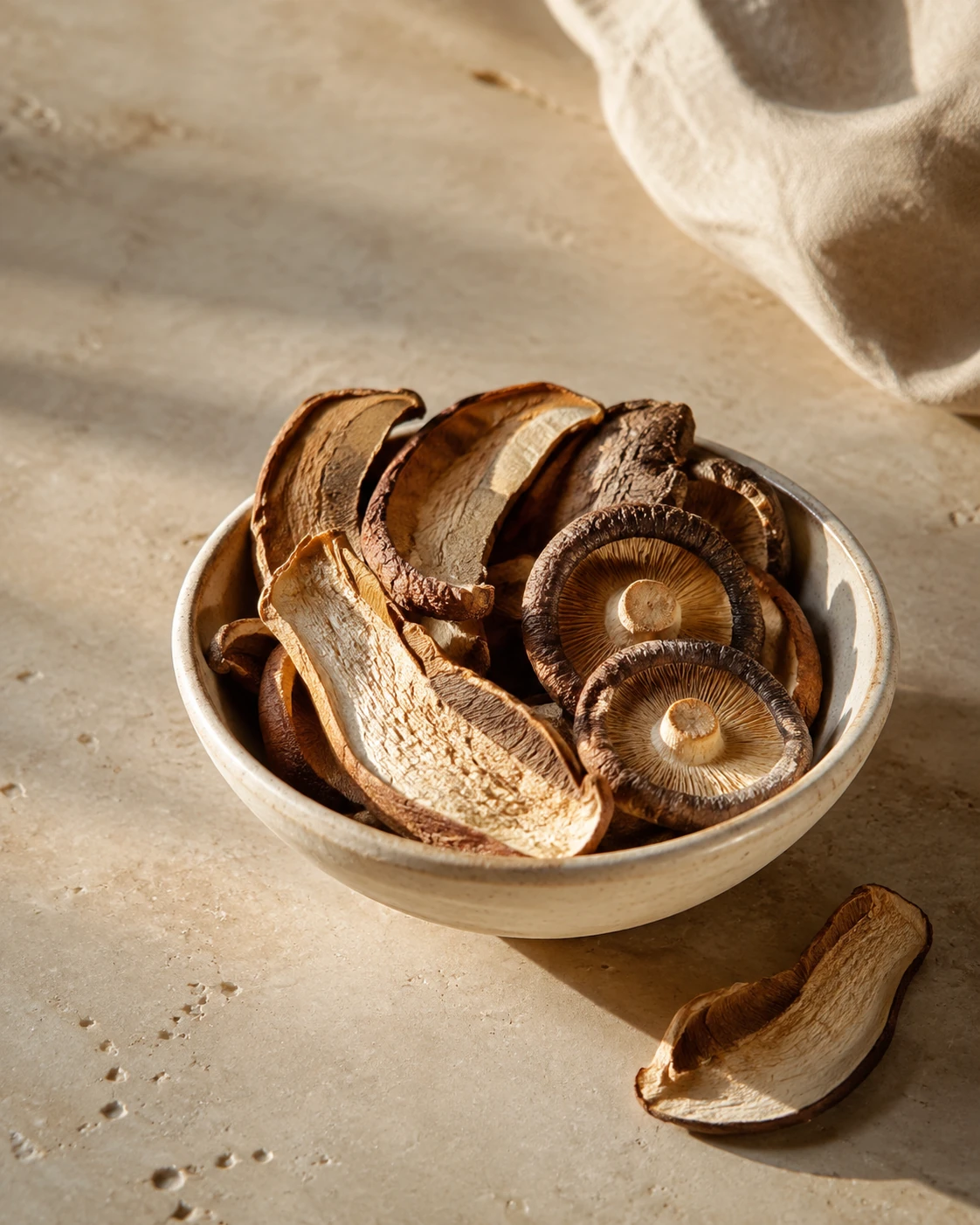
How to Store Dried Mushrooms to Protect Flavor and Shelf Life
Dried mushrooms are naturally shelf-stable, but humidity, light and air can still dull their flavor. These storage practices help kitchens, warehouses and retailers protect every batch.

One of the biggest advantages of dried mushrooms is their long, shelf-stable life. They do not need cold storage, they take up little space, and they are ready whenever you need them. But "shelf-stable" does not mean "indestructible." Moisture, heat, light and air exposure can all affect aroma, color and texture over time. Good storage habits protect both product quality and your investment.
The Four Enemies of Dried Mushrooms
Moisture
Dried mushrooms readily absorb moisture from the air. Humidity can soften them, cause clumping in powders and, in the worst cases, lead to mold. Keeping product dry is the single most important storage rule.
Heat
High temperatures speed up the loss of aroma and can affect color. Store dried mushrooms away from ovens, dishwashers, warehouse heaters and sunny loading docks.
Light
Direct sunlight fades color and degrades flavor. Opaque packaging or a dark storage area keeps mushrooms looking and tasting their best.
Air
Prolonged exposure to air allows aromas to escape and moisture to enter. Once a package is opened, reseal it properly or transfer the contents to an airtight container.
Best Practices for Kitchens and Restaurants
- Store dried mushrooms in airtight containers or well-sealed original packaging.
- Keep them in a cool, dry, dark pantry or dry-storage room.
- Label each container with the variety, cut, lot number and date opened.
- Use clean, dry scoops and utensils so no moisture is introduced.
- Rotate stock on a first-in, first-out (FIFO) basis.
Best Practices for Warehouses and Distributors
For distributors and food manufacturers holding larger volumes, storage conditions should be part of standard operating procedures:
- Control humidity. Store product off the floor on pallets, away from exterior walls and doors where condensation can form.
- Keep cases sealed until they are needed, and reseal partial cases immediately.
- Maintain traceability. Record lot numbers on receipt and keep them visible during storage so any batch can be traced quickly.
- Inspect on receipt. Check packaging integrity and look for signs of moisture or damage before product goes into stock.
- Follow pest-control and housekeeping programs in line with your food safety system.
Packaging Makes a Difference
Good packaging is the first line of defense. Durable, resealable barrier packaging protects mushrooms from moisture, air and physical crushing, while clear labeling helps staff identify varieties, lot numbers and dates at a glance. If you sell dried mushrooms to consumers, packaging also shapes how shoppers judge quality on the shelf. Read more about retail mushroom packaging.
Storing Mushroom Powders
Powders have far more surface area than whole or sliced mushrooms, which makes them more sensitive to humidity. Keep powders tightly sealed, avoid opening them in steamy production areas and use a dry scoop every time. If a powder starts to clump, it has likely been exposed to moisture.
How to Tell If Dried Mushrooms Are Past Their Best
- Aroma: A faint or musty smell instead of a rich, earthy aroma
- Texture: Soft or leathery pieces before rehydration, or clumping in powders
- Appearance: Significant fading, discoloration or any sign of mold
Any product showing signs of mold or moisture damage should be discarded.
Buy Smart, Store Smart
Because dried mushrooms keep so well, buying in bulk can reduce ordering frequency and stabilize ingredient costs, as long as you have the right storage in place. Mushroom House supplies dried mushrooms in flexible volumes from our Long Island warehouse. Learn more about our bulk dried mushrooms wholesale program or contact our team.