BRC Certified Mushroom Supplier: What Buyers Need to Know About Food Safety Verification
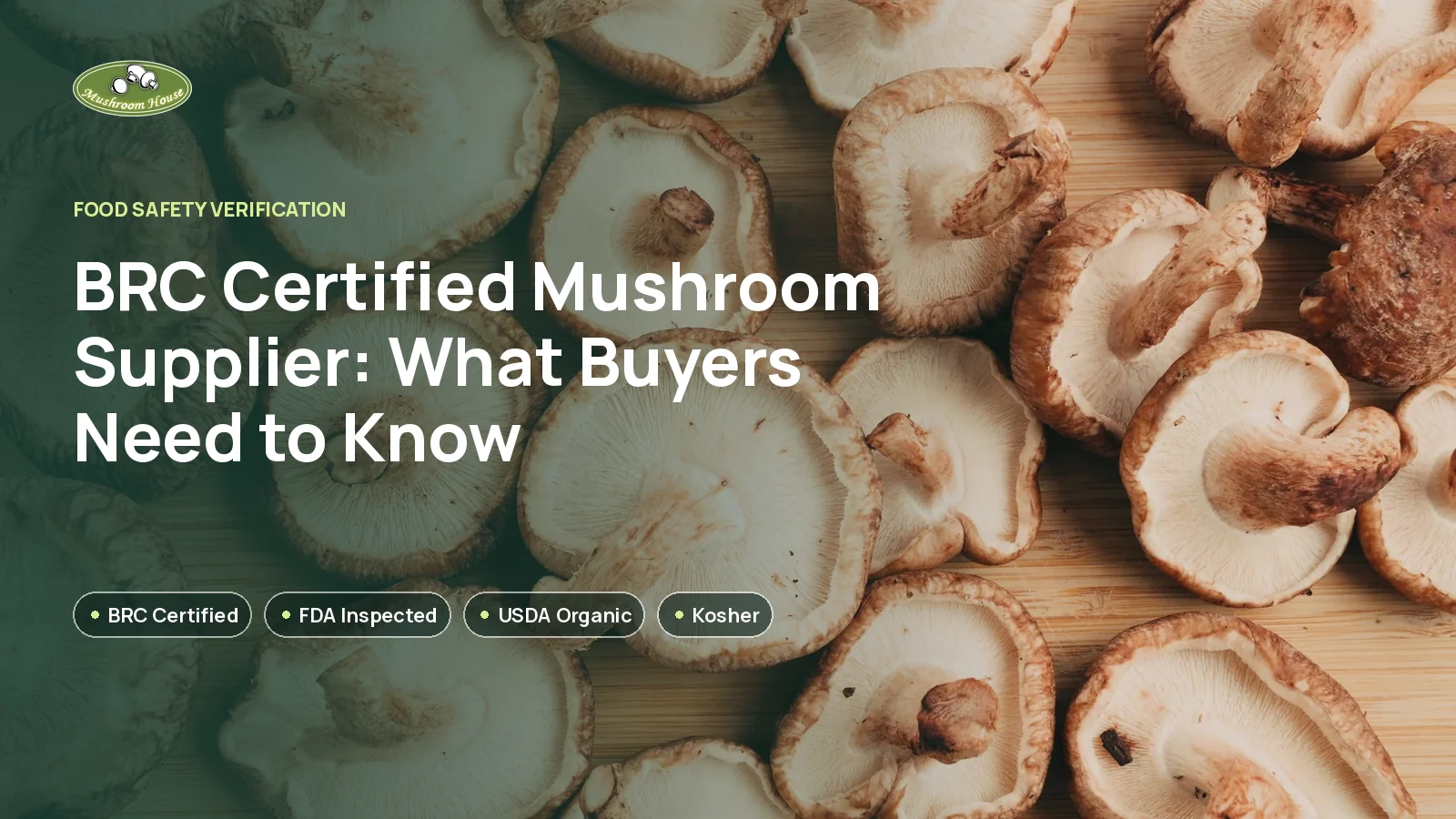
A BRC certified mushroom supplier has passed a third-party audit of its premises, systems and procedures against the BRCGS Global Standard for Food Safety, and many retailers and brand owners ask for that audit when they approve a supplier.
What BRC Certification Means for Mushroom Suppliers
A BRC certified mushroom supplier has passed a third-party audit of its premises, systems and procedures against the BRCGS Global Standard for Food Safety, and many retailers and brand owners ask for that audit when they approve a supplier. For mushrooms, the audit looks at documented HACCP-based processes, allergen management, hygiene and supplier oversight. It's a useful filter.
1. Supply Source Verification and Audit
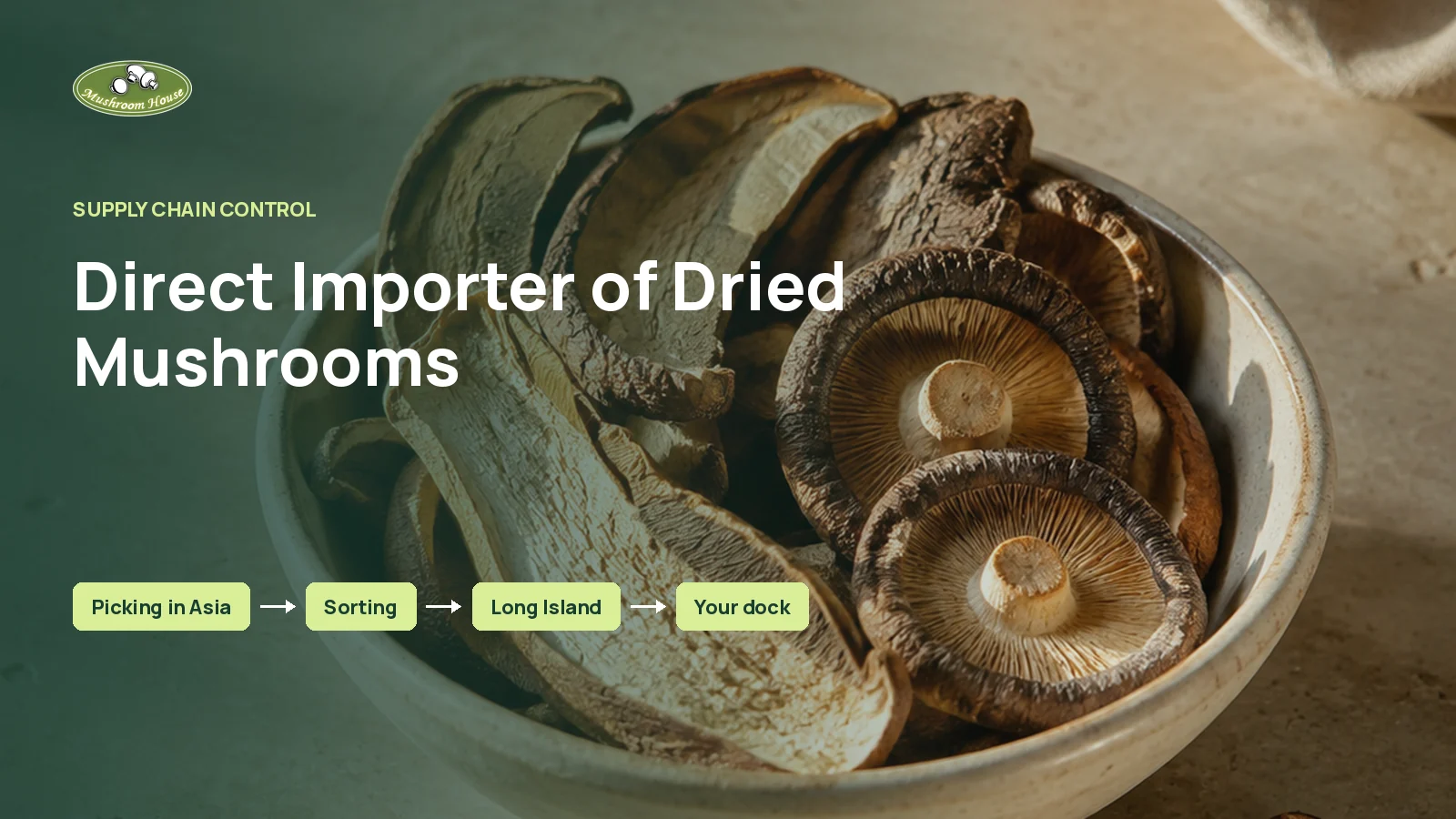
Start with the source. For an importer like Mushroom House, the supply chain runs from our own picking and sorting facilities in Asia to our warehouse and processing center on Long Island, and the BRC certified, FDA inspected facility is the one in Long Island, NY.
Certification is renewed with a new audit every year. If the name or address doesn't match, ask why before you place an order.
2. Traceability and Documentation Systems
Every batch needs to be traceable. A working system lets a supplier isolate one lot instead of pulling everything off the shelf, and that only works if lot numbers, receiving records and shipping records connect from the incoming product to the order that left the dock.
When you evaluate a supplier, ask to see how a single lot is tracked from arrival to shipment. A clear answer, with paperwork to back it, tells you more than a promise does.
3. FDA Import Compliance and Prior Notice
Your supplier should be able to explain how that filing is handled for each shipment.
We import kosher, gourmet, and bulk dried mushrooms from an FDA-inspected and BRC-certified facility in Long Island, NY, so the verification record sits close to where the product ships from. You can see how our dried mushroom import program works before you ask for documents.
4. Quality Control and Corrective Action Processes
The standard calls for regular internal controls and documented corrective actions. That gives you something concrete to ask about: what happens when a lot doesn't meet spec, and who signs off on the fix?
Ask to see the quality records behind a lot, and ask which checks the supplier runs before product ships. Good suppliers answer these questions without hesitation.
Ready to Partner With a BRC-Certified Supplier
If you buy for a restaurant, manufacturing line, distributor, or store, call 516 942 9312 or visit www.mushroomhouseusa.com. We'll talk through your volume and product needs across dried, frozen, canned, or powdered mushrooms, and you can ask to verify our certification.
Frequently Asked Questions
What does a BRC audit actually check in a mushroom facility?
It covers the premises, the food safety system (HACCP documentation, allergen procedures) and supplier oversight. Auditors also test traceability and review corrective action records.
How do I verify a mushroom supplier's BRC certification is current?
Ask the supplier for the certificate and check the expiry date, since a new audit is required every year. Confirm the facility named on it matches where your product is actually packed.
Does BRC certification apply to dried mushrooms the same as frozen or canned?
The standard itself is the same regardless of product. Certification is tied to a specific facility, though, so check the certificate's scope to see which products and sites it covers before you assume it applies to a given format.
Why do U.S. retailers and restaurants require BRC certification from mushroom suppliers?
It shows a third party has audited the supplier's food safety, quality control and traceability, which lowers the buyer's risk. Many buyers also like having an independent report on file for their own supplier approval.